
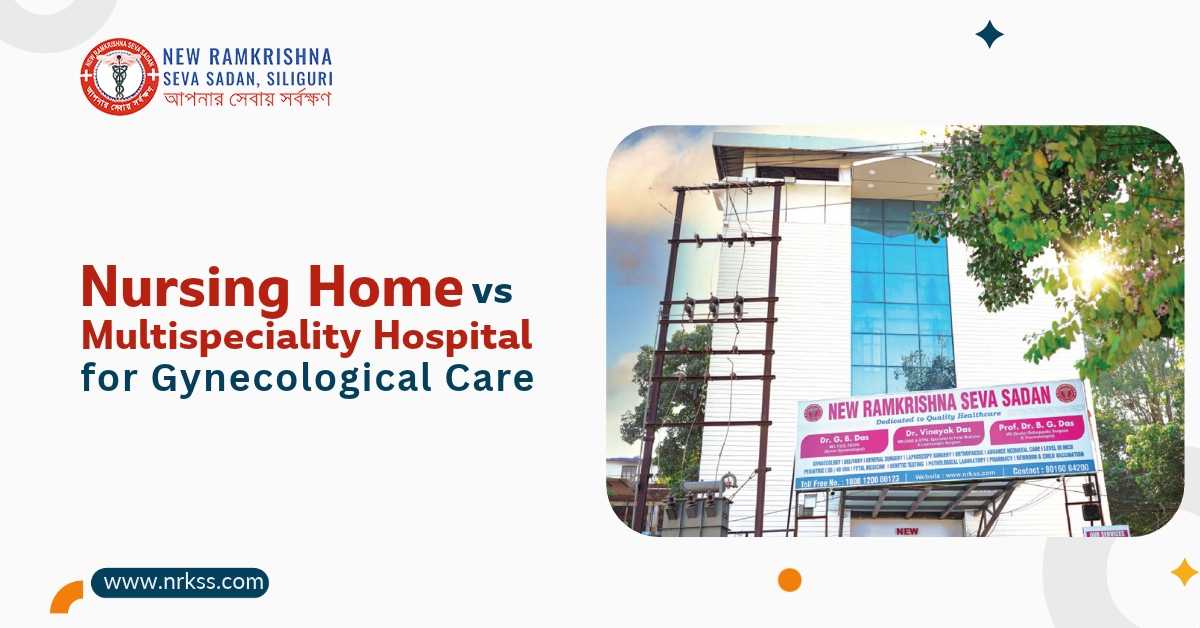
PCOS, irregular periods, infections, fertility problems, and pregnancy-related concerns may require gynaecological care. Depending on the condition, a nursing home or a multispeciality hospital may offer the medical support you need. Both facilities provide gynaecological services, but their specialists, diagnostic facilities, and treatment arrangements may differ. When choosing a gynaecologist hospital in Siliguri, consider the doctor's qualifications, available facilities, and emergency support. Understanding these differences can help you choose a healthcare facility that matches your medical needs.
What Is the Key Difference Between a Nursing Home and a Multispeciality Hospital for Gynaecological Care?
|
Comparison Factors |
Nursing Home |
Multispeciality Hospital |
|
Medical Services |
May provide selected healthcare services, including routine gynaecological consultations and maternity care. |
May offer multiple medical services through different departments, including gynaecology. |
|
Availability of Gynaecologists |
May have one or more gynaecologists, depending on the facility. |
May have multiple gynaecologists with different areas of expertise. |
|
|
Limited access to specialists from other medical fields. |
May provide access to physicians, surgeons, paediatricians and other specialists. |
|
Diagnostic Facilities |
Other Medical Specialists |
May have in-house laboratories, ultrasound, X-ray and other imaging facilities. |
|
Pregnancy Care |
May provide antenatal check-ups, delivery services and postnatal care if maternity facilities are available. |
May offer pregnancy monitoring, delivery services and support from other specialists. |
|
Surgical Facilities |
May have operation theatres for selected gynaecological procedures. |
May offer more extensive surgical facilities, depending on its infrastructure and medical team. |
|
Emergency Support |
Emergency arrangements vary. Some cases may require transfer to another hospital. |
May have an emergency department, on-call specialists, and critical care facilities. |
|
Complex Gynaecological Conditions |
May manage common conditions and refer to complex cases when additional facilities are needed. |
May provide multidisciplinary support for conditions requiring different specialists. |
|
PCOS Management |
May provide consultations, diagnosis and follow-up care. |
May offer consultations with gynaecologists, endocrinologists and other specialists when required. |
|
Fertility-Related Care |
May provide initial fertility assessments and consultations. |
May offer access to gynaecologists and fertility specialists, depending on available services. |
|
Patient Follow-Up |
May provide focused consultations and follow-up appointments. |
May coordinate follow-ups across different medical departments. |
|
Medical Equipment |
Equipment depends on the services and infrastructure available. |
May have a wider range of diagnostic, surgical and patient-monitoring equipment. |
|
Treatment Costs |
Costs depend on consultations, investigations and procedures. |
Costs depend on specialist fees, diagnostic tests, room facilities and treatment requirements. |
Facilities and services can differ from one healthcare centre to another. Some nursing homes provide advanced medical care, while multispeciality hospitals may not offer every service in every department.
When Should You Choose a Nursing Home or Multispeciality Hospital for Gynaecological Care?
Choose a Nursing Home
A nursing home can provide care for common gynaecological concerns, including:
● Routine Check-ups: Regular visits for reproductive health concerns.
● Irregular Periods: Consultation for changes in periods, painful menstruation, or unusual bleeding.
● PCOS: Initial diagnosis, treatment, and regular monitoring.
● Common Infections: Consultation for vaginal infections and related symptoms.
● Routine Pregnancy Care: Antenatal check-ups and pregnancy monitoring.
● Family Planning: Guidance on contraception and reproductive health.
● Postnatal Care: Medical check-ups after childbirth.
Choose a Multispeciality Hospital
A multispeciality hospital can be a better option when your condition needs care from different specialists, further tests, or hospital-based treatment.
You may need one for:
● High-Risk Pregnancy: Pregnancy that requires close monitoring or specialist care.
● Complex Gynaecological Conditions: Conditions that need detailed tests or specialised treatment.
● Fertility Problems: Further tests to identify possible causes of difficulty conceiving.
● Gynaecological Surgery: Procedures that require surgical and anaesthesia support.
● Pregnancy Complications: Problems that need urgent medical attention or additional care.
● PCOS with Other Conditions: PCOS along with thyroid disorders, diabetes, or other health problems.
● Medical Emergencies: Situations that require urgent treatment or critical care.
The type of facility you choose should match your condition and the treatment recommended by your doctor.
What Factors Should You Consider Before Choosing a Healthcare Facility?
Qualifications and Experience of the Gynaecologist
Find out about the doctor's qualifications, medical registration, and experience in treating women's health conditions.
Look at:
● Medical qualifications and registration.
● Experience in obstetrics and gynaecology.
● Experience with your particular health concern.
Diagnostic Facilities
Your doctor may recommend tests to understand the cause of your symptoms. Find out whether the healthcare centre can arrange these tests.
Common tests include:
● Blood and urine tests.
● Ultrasound examinations.
● Hormonal tests.
● Other imaging tests, if needed.
Pregnancy and Maternity Facilities
If you plan to receive pregnancy care at the facility, ask about its maternity services.
Find out whether it provides:
● Antenatal check-ups.
● Delivery services.
● Trained nursing staff.
● Postnatal care.
● Newborn care.
Emergency Medical Support
Pregnancy complications and certain gynaecological conditions can require immediate attention. Ask about the emergency arrangements before choosing a facility.
Important services include:
● Emergency medical care.
● Availability of doctors and nursing staff.
● Operation theatre facilities.
● Anaesthesia services.
● Intensive care or patient transfer arrangements.
Other Medical Specialists
Some conditions need attention from doctors in different fields. For example, a woman with PCOS and thyroid problems may need consultations with a gynaecologist and an endocrinologist.
Other specialists who may be involved include:
● Physicians.
● Endocrinologists.
● Surgeons.
● Anaesthesiologists.
● Paediatricians, when required.
Surgical and Treatment Facilities
If your doctor recommends surgery, ask about the facilities and medical support available before admission.
These include:
● Operation theatres.
● Anaesthesia services.
● Pre-surgery assessments.
● Post-surgery monitoring.
● Infection-control measures.
Cleanliness and Hygiene
Pay attention to the cleanliness of the healthcare centre, including:
● Consultation rooms.
● Patient wards.
● Washrooms.
● Operation theatres.
● Medical equipment.
Follow-Up Care
Treatment may involve more than one visit. Ask how the facility manages follow-up appointments and patient records.
Check whether it provides:
● Follow-up consultations.
● Updated medical records.
● Clear instructions about treatment.
● Advice on medicines and further tests.
Location and Accessibility
The distance from your home can matter when you need regular consultations or emergency care.
Consider:
● Distance from home.
● Travel time.
● Availability of emergency transport.
● Parking facilities.
Treatment Costs
Ask about the expected expenses before starting treatment. Request a breakdown of charges for:
● Doctor consultations.
● Diagnostic tests.
● Medicines.
● Room charges and admission.
● Surgical procedures.
Choose a healthcare centre that has the specialists and facilities your condition requires. Discuss the available treatment options and costs with your doctor before proceeding.
Frequently Asked Questions
Can I visit a nursing home for PCOS treatment?
Yes. You can consult a qualified gynaecologist at a nursing home for PCOS assessment and treatment. The care provided will depend on the doctor's advice and the facilities available at the centre.
Should I choose a nursing home or a multispeciality hospital for pregnancy care?
Both may provide pregnancy care. Consider your pregnancy needs, the doctor's advice, available maternity services, and emergency support before deciding.
Do all nursing homes provide delivery services?
No. Delivery services are not available at every nursing home. Check whether the facility has trained staff, suitable delivery arrangements, and emergency support.
When should I visit a multispeciality hospital for gynaecological problems?
You may need a multispeciality hospital if your condition requires care from different specialists, detailed investigations, surgery, or additional medical support.
Conclusion
Nursing homes and multispeciality hospitals can both provide gynaecological care, but their services and facilities may vary. Your choice should depend on your health condition and the type of treatment you need. When choosing a gynaecological hospital in Siliguri, check the doctor's qualifications, diagnostic facilities, available specialists, and emergency support. The size or type of healthcare centre alone does not determine whether it is suitable for your needs. For menstrual, pregnancy-related, or other reproductive health concerns, consult a qualified gynaecologist. The doctor can assess your condition and advise you on the appropriate level of care.