


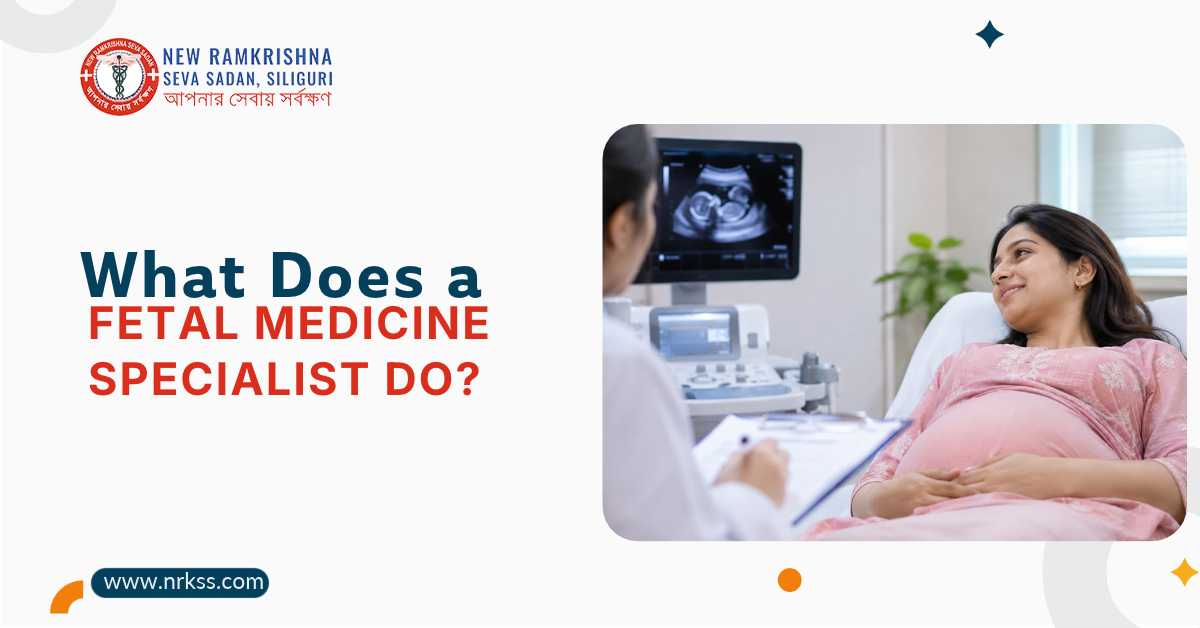

A baby's heartbeat, tiny movements, and growth measurements provide useful information about their development during pregnancy. Sometimes, routine check-ups are not enough to examine how the baby's organs are forming or to understand unusual findings during a scan. A closer assessment may be needed to check fetal growth and identify possible health concerns. A fetal medicine specialist performs detailed ultrasound examinations, reviews prenatal screening results, and assesses findings that may need further investigation. They also discuss scan reports and additional tests with parents. A consultation with a Fetal medicine specialist in Siliguri may be recommended if an ultrasound shows an unusual finding, a screening test indicates a possible concern, or the pregnancy needs closer monitoring.
Also Read: How to Prepare for Your First Gynecology Appointment
Who Is a Fetal Medicine Specialist?
Fetal medicine is a branch of medicine that focuses on the baby's health and development during pregnancy. A fetal medicine specialist is a doctor trained to assess fetal growth, examine the baby's organs, and identify possible complications before birth.
Their work includes:
- Specialised fetal ultrasound examinations.
- Prenatal screening and diagnostic tests.
- Assessment of fetal development.
- Evaluation of pregnancy-related concerns.
- Discussion of scan findings and test results.
A fetal medicine specialist does not replace a regular obstetrician or gynaecologist. Both may work together when additional pregnancy care is needed. The obstetrician or gynaecologist continues to manage routine pregnancy care, while the fetal medicine specialist focuses on specific concerns related to the baby's health.
What Does a Fetal Medicine Specialist Do During Pregnancy?
Monitors the Baby's Growth and Development
- Checks fetal growth at different stages.
- Measures the baby's head, abdomen, and limbs.
- Compares measurements with expected growth.
- Checks amniotic fluid levels.
Performs Detailed Pregnancy Ultrasound Scans
Different scans examine the baby's development:
- NT Scan: Measures fluid behind the baby's neck during the first trimester.
- Anomaly Scan: Examines major organs and body structures, usually at 18–22 weeks.
- Growth Scan: Measures the baby's size and growth.
- Doppler Scan: Evaluates blood flow in selected blood vessels.
- Fetal Echocardiography: Examines the baby's heart structure and function.
The doctor reviews pregnancy history, gestational age, and scan findings when recommending further examinations.
Identifies Possible Birth Defects and Fetal Abnormalities
- Examines the baby's organs and body structures.
- Looks for possible structural abnormalities.
- Recommends further tests when necessary.
- Explains unusual scan findings to parents.
Ultrasound cannot detect every birth defect or health condition.
Assesses High-Risk Pregnancies
Additional fetal assessment may be recommended in cases involving:
- Previous pregnancy complications.
- Twin or multiple pregnancies.
- Maternal diabetes or high blood pressure.
- Suspected fetal growth restriction.
- Unusual ultrasound findings.
- Previous fetal or genetic conditions.
- Placental or amniotic fluid concerns.
The doctor reviews medical records and examination findings before advising on further monitoring.
Evaluates Placental and Amniotic Fluid Conditions
- Checks placental position and appearance.
- Measures amniotic fluid levels.
- Assesses possible signs of placental insufficiency.
- Monitors low or high fluid levels.
- Reviews other placental findings.
Explains Prenatal Screening and Diagnostic Tests
A fetal medicine specialist explains prenatal tests, their purpose, and their results.
|
Test |
What it checks |
|
NIPT |
Screens for selected chromosomal conditions using maternal blood. |
|
First-Trimester Combined Screening |
Combines blood test results and NT measurements. |
|
Quadruple Marker Test |
Screens for selected chromosomal conditions and neural tube defects. |
|
Amniocentesis |
Tests amniotic fluid for certain genetic or chromosomal conditions. |
|
Chorionic Villus Sampling (CVS |
Tests placental tissue for selected genetic or chromosomal conditions. |
Important points about these tests:
- Screening tests estimate the likelihood of certain conditions.
- Provide specific information about certain conditions.
- The specialist explains each test's purpose and risks.
- Testing requires counselling and informed consent.
When Should You Consult a Fetal Medicine Specialist?
An obstetrician may recommend a fetal medicine consultation if a scan, screening result, or medical history needs further assessment. Common reasons include:
Unusual Findings During Pregnancy Scans
- Unusual findings in a routine ultrasound.
- Need for a detailed fetal examination.
- Findings that require additional investigation.
An unusual scan finding does not always indicate a serious problem.
Risk of Genetic or Chromosomal Conditions
- Family history of genetic conditions.
- Previous pregnancy affected by a genetic condition.
- High-risk prenatal screening result.
- Need for counselling about genetic tests.
Multiple Pregnancy
- Pregnancy with twins or triplets.
- Assessment of individual fetal growth.
- Examination of placental arrangement.
- Monitoring pregnancy-related concerns.
Maternal Health Conditions
- Diabetes during pregnancy.
- High blood pressure.
- Autoimmune conditions.
- Previous pregnancy complications.
What Services Does a Fetal Medicine Specialist Provide?
A fetal medicine specialist provides different examinations and pregnancy assessments to check fetal growth, development, and possible health concerns. Services may include:
|
Service |
Purpose |
|
Detailed Fetal Ultrasound |
Fetal anatomy assessment |
|
NT Scan |
First-trimester screening measurement |
|
Anomaly Scan |
Structural examination |
|
Fetal Growth Assessment |
Growth measurements |
|
Doppler Assessment |
Blood flow assessment |
|
Fetal Echocardiography |
Fetal heart examination |
|
Prenatal Screening Counselling |
Test information and results |
|
Genetic Counselling or Referral |
Genetic risk assessment |
|
High-Risk Pregnancy Monitoring |
Pregnancy follow-up |
What Happens During a Fetal Medicine Consultation?
Medical and Pregnancy History: The doctor asks about previous pregnancies, health conditions, and family history.
Previous Reports: Earlier ultrasound scans, blood tests, and screening results are reviewed.
Ultrasound Assessment: A specialised scan may be performed to examine fetal growth and development.
Discussion of Findings:The doctor explains the scan results and any unusual findings.
Additional Tests:Further screening, diagnostic tests or specialist consultations may be discussed.
Follow-Up: The doctor discusses repeat scans or additional monitoring.
The consultation process varies with the stage of pregnancy, medical history, and reason for referral.
Difference Between an OB-GYN and a Fetal Medicine Specialist
|
Area of Care |
OB-GYN (Obstetrician-Gynaecologist) |
Fetal Medicine Specialist |
|
Main Focus |
Mother's reproductive and pregnancy health. |
Baby's health and development before birth. |
|
Pregnancy Care |
Provides routine antenatal care. |
Assesses pregnancies requiring specialised fetal evaluation. |
|
Ultrasound Scans |
Performs routine pregnancy scans. |
Performs detailed fetal ultrasound examinations. |
|
Fetal Growth |
Monitors general pregnancy progress. |
Examines fetal growth and development. |
|
Birth Defects |
Identifies concerns during routine examinations. |
Assesses suspected fetal abnormalities. |
|
Screening Tests |
Recommends routine prenatal screening. |
Explains screening results and diagnostic testing options. |
|
Labour and Delivery |
Manages labour and childbirth. |
Focuses on fetal assessment and pregnancy monitoring. |
At the end
Fetal medicine covers several aspects of pregnancy care, including growth measurements, detailed ultrasound scans, prenatal screening, and the assessment of possible fetal abnormalities. These examinations provide information about the baby's development before birth. Some findings may require repeat scans, additional tests, or closer observation. The doctor explains these findings and discusses further investigations. During a consultation with a Fetal medicine specialist in Siliguri, the doctor may review pregnancy records, previous scans, and screening results.
Frequently Asked Questions
What are the benefits of consulting a fetal medicine specialist?
A consultation can provide information about fetal growth, organ development, and findings that may need further assessment.
Can a fetal medicine specialist detect problems with the baby's brain?
A detailed ultrasound may identify certain structural abnormalities in the baby's brain. Additional examinations may be recommended if unusual findings are seen.
Is a fetal medicine scan painful?
Ultrasound scans are generally painless. During an abdominal scan, the sonographer moves a probe over the mother's abdomen to examine the baby. Some examinations may cause mild discomfort.
Can I visit a fetal medicine specialist without a referral?
Some medical centres accept direct appointments, while others require a referral from an obstetrician.
Can a fetal medicine specialist check the baby's position?
Yes. An ultrasound scan can show whether the baby is head-down, breech, or in another position.
Should I bring previous pregnancy reports to the appointment?
Yes. Carry previous ultrasound reports, blood test results, and prenatal screening records for the doctor's review.
