



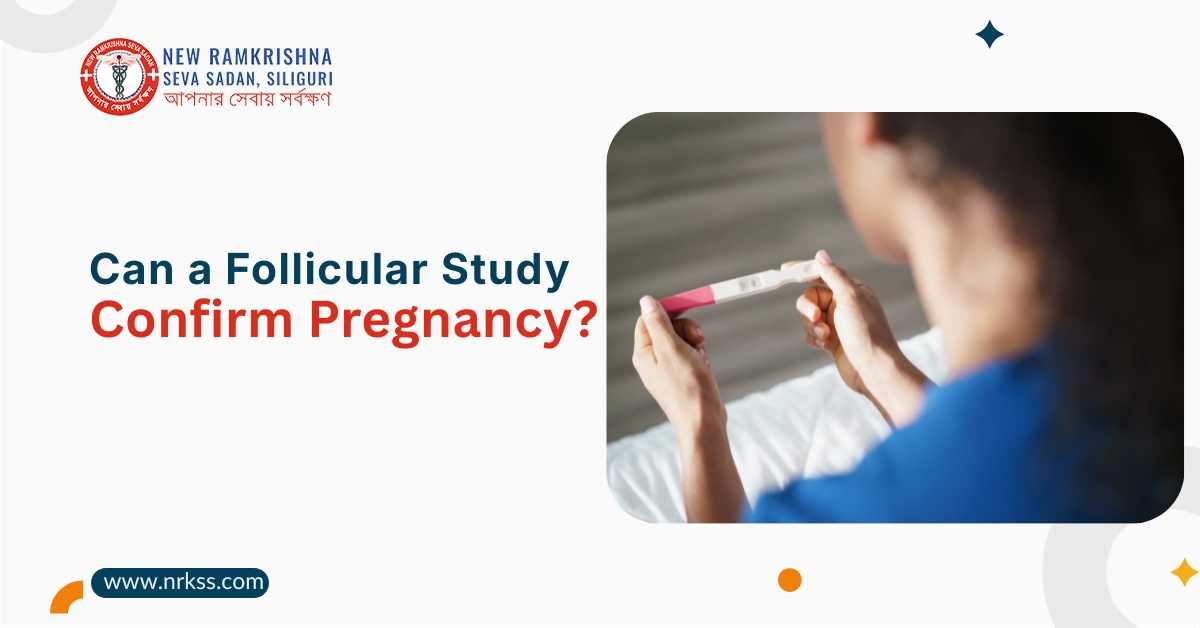
The short answer is no. A follicular study cannot confirm pregnancy because its purpose is to monitor ovulation, not detect fertilisation or implantation.
A follicular study is a series of pelvic ultrasound scans that track the growth and development of ovarian follicles the small, fluid-filled sacs in the ovaries where eggs mature. By monitoring these follicles, doctors can identify the most fertile days of a woman's menstrual cycle and recommend the best time for natural conception or fertility treatments such as Intrauterine Insemination (IUI) and In Vitro Fertilisation (IVF).
Although this test plays an important role in fertility planning, it cannot detect whether an egg has been fertilised or implanted in the uterus. Pregnancy can only be confirmed through a urine pregnancy test or a Beta-hCG blood test after implantation has occurred.
If you are planning a pregnancy or undergoing fertility treatment, consulting the Best Gynaecologist in Siliguri can help ensure accurate ovulation monitoring and personalised fertility guidance.
This guide explains how a follicular study works, when it is performed, what to expect during the procedure, and why it is an important part of fertility care.
What is a Follicular Study?
A follicular study, also known as follicular monitoring or folliculometry, is a series of transvaginal ultrasound scans performed during a menstrual cycle to observe the growth of ovarian follicles. These follicles contain the eggs that mature before ovulation.
The primary purpose of this study is to determine when a mature egg is likely to be released. This helps identify the most fertile period of the menstrual cycle, allowing couples to plan natural conception or enabling doctors to schedule fertility procedures such as IUI or IVF at the right time.
Besides monitoring ovulation, a follicular study also evaluates the thickness of the uterine lining, which plays an important role in preparing the uterus for implantation if fertilisation occurs.
Consulting an experienced Gynaecologist in Siliguri ensures accurate interpretation of ultrasound findings and helps determine whether additional fertility investigations are required.
Evidence-Based Insight
A follicular study is one of the most commonly used methods for monitoring ovulation in women trying to conceive. By tracking follicle growth over several days, doctors can accurately estimate the fertile window and plan the timing of natural conception or fertility treatments. While the scan provides valuable information about ovulation, it does not confirm fertilisation or pregnancy.
How is a Follicular Study Performed?
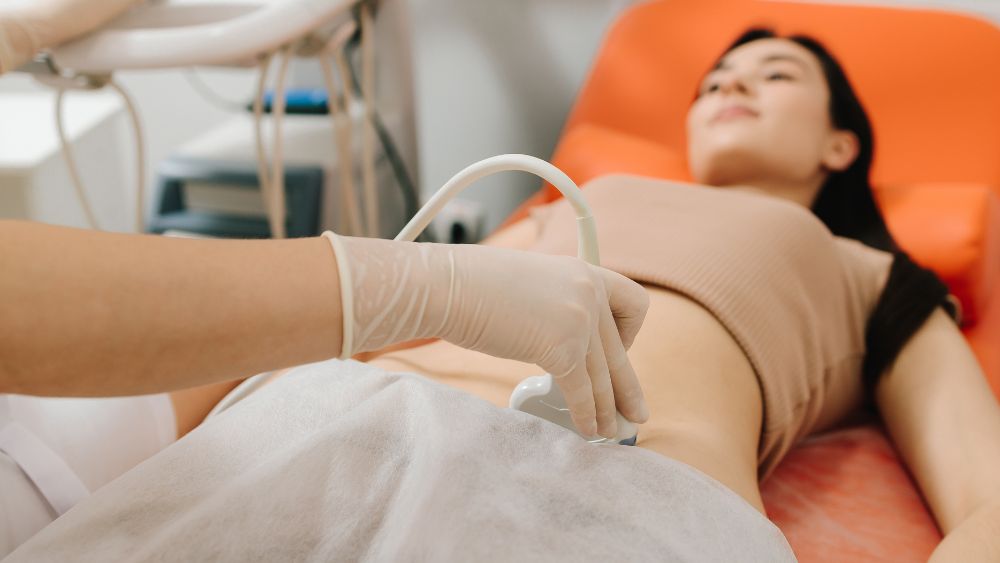
A follicular study involves a series of transvaginal ultrasound scans performed over different days of the menstrual cycle. Each scan helps your doctor observe how the follicles develop and determine when ovulation is most likely to occur.
The process generally includes four stages.
1. Baseline Scan (Day 2–5)
The baseline scan is the first step of a follicular study. It provides a clear picture of the uterus and ovaries at the beginning of the menstrual cycle when hormone levels are naturally low.
When is it performed?
The scan is usually performed between Day 2 and Day 5 of the menstrual cycle, soon after menstruation begins.
Purpose
The baseline scan helps your doctor:
- Assess the health of the ovaries and uterus.
- Check for ovarian cysts or any abnormalities.
- Measure the thickness of the uterine lining.
- Plan the remaining scans for the cycle.
2. Monitoring Phase (Day 9 Onwards)
From around Day 9, regular ultrasound scans are performed to monitor the growth of ovarian follicles.
During each visit, the doctor measures the size of the developing follicles and evaluates the uterine lining to identify the dominant follicle the follicle most likely to release a mature egg.
When is it performed?
Scans are usually repeated every one to three days, depending on how quickly the follicles are growing.
Purpose
The monitoring phase helps doctors:
- Measure follicle growth.
- Identify the dominant follicle.
- Monitor changes in the uterine lining.
- Predict the expected ovulation date.
3. Maturation Phase (Day 12–15)
As ovulation approaches, the dominant follicle continues to grow until it reaches maturity.
In most women, a mature follicle measures approximately 18–22 mm in diameter. At this stage, the doctor determines whether ovulation is likely to occur naturally or whether an ovulation-trigger injection is required.
When is it performed?
This scan is usually scheduled between Day 12 and Day 15, depending on the length of your menstrual cycle.
Purpose
The maturation scan helps your doctor:
- Confirm that the dominant follicle has reached maturity.
- Determine the best time for ovulation.
- Plan timed intercourse or fertility procedures.
- Decide whether a trigger injection is needed to induce ovulation.
4. Post-Ovulation Scan
The final scan confirms whether ovulation has actually taken place.
Instead of looking for pregnancy, the doctor checks whether the mature follicle has ruptured and released the egg.
When is it performed?
The scan is usually performed one to two days after the expected ovulation date.
Purpose
The post-ovulation scan helps:
- Confirm successful ovulation.
- Observe the ruptured follicle.
- Verify that the ovulation process has been completed.
What Should You Expect During Each Visit?
A follicular study is a simple outpatient procedure. Each transvaginal ultrasound usually takes 10 to 15 minutes, and you can return to your daily routine immediately afterwards. This allows the best Gynaecologist Doctor in Siliguri to pinpoint exactly when you will ovulate through follicular monitoring. The things that you can expect during each visit are listed below.
Before the Scan
No fasting is required before the procedure. However, you may be asked to empty your bladder to improve the visibility of the reproductive organs during the ultrasound.
During the Scan
You will lie comfortably on an examination table while a thin, lubricated ultrasound probe is gently inserted into the vagina. The probe produces images of the ovaries and uterus, allowing the doctor to measure follicle size and examine the uterine lining.
Most women experience only mild discomfort, and the procedure is generally well tolerated.
After the Scan
There is no recovery period or special care required. Your doctor will explain the ultrasound findings, discuss follicle growth, and advise you on the next scan or the best time for conception, depending on your treatment plan.
What is the Purpose of a Follicular Study?
A follicular study is performed to understand how the ovaries function during the menstrual cycle and to identify the best time for conception. Besides tracking ovulation, it also helps doctors assess fertility, monitor treatment progress, and detect conditions that may affect reproductive health.
Here are the main reasons why a follicular study is recommended.
1. To Track Ovulation Accurately
The primary purpose of a follicular study is to determine when ovulation is likely to occur. By monitoring the growth of ovarian follicles, doctors can identify the release of a mature egg and accurately predict the fertile window.
This information helps couples plan intercourse at the right time, increasing the chances of natural conception.
2. To Diagnose Ovulation Problems
Irregular ovulation is a common cause of difficulty in conceiving. A follicular study helps doctors understand whether the ovaries are releasing eggs normally.
It can assist in identifying conditions such as:
- Polyendocrine metabolic ovarian syndrome (PMOS)
- Anovulation (when the ovary does not release an egg)
- Delayed or irregular ovulation
- Poor follicular development
Early diagnosis allows appropriate treatment and improves fertility planning.
3. To Monitor Fertility Treatment
Women taking ovulation-inducing medicines require regular monitoring to see how their ovaries respond to treatment.
A follicular study helps doctors:
- Monitor follicle growth
- Assess the response to fertility medications
- Adjust medicine doses when required
- Reduce the risk of excessive ovarian stimulation
This personalised monitoring improves both safety and treatment planning.
4. To Improve the Timing of IUI and IVF
Successful fertility treatment depends greatly on timing.
A follicular study allows doctors to identify the ideal time for:
- Ovulation-trigger injections
- Intrauterine Insemination (IUI)
- Egg retrieval during IVF
- Embryo transfer planning
Accurate monitoring helps fertility specialists coordinate these procedures with the body's natural cycle.
5. To Assess the Uterine Lining
A healthy uterine lining is essential for implantation after fertilisation.
Along with monitoring follicle growth, a follicular study measures the thickness and appearance of the endometrium (uterine lining). This helps doctors determine whether the uterus is well prepared to support a pregnancy.
What Happens After Ovulation is Confirmed?
Once the dominant follicle has matured and released an egg, the follicular study is complete. At this stage, your doctor will guide you through the next steps based on your fertility plan.
It is important to remember that although ovulation has occurred, pregnancy cannot yet be confirmed. Fertilisation and implantation take place several days later and cannot be seen on a follicular ultrasound.
Why Accurate Timing Matters
The fertile window lasts only a few days during each menstrual cycle.
After ovulation, an egg remains capable of being fertilised for about 12 to 24 hours, while healthy sperm can survive inside the female reproductive tract for up to five days. Because this fertile period is short, identifying ovulation accurately is extremely important.
A follicular study helps your doctor determine the most appropriate time for natural conception or fertility treatment, improving fertility planning and reducing guesswork.
Timed Intercourse or Fertility Treatment
Once ovulation is confirmed, your doctor may advise you to have intercourse during the next 24 to 36 hours, when the chances of fertilisation are highest.
If you are undergoing fertility treatment, this is also the ideal time for procedures such as:
- Intrauterine Insemination (IUI)
- Ovulation-trigger injections
- Egg retrieval for IVF
- Other planned fertility procedures
The exact timing depends on your treatment plan and the ultrasound findings.
The Two-Week Wait
After ovulation, you will usually be advised to wait for about 12 to 14 days before taking a pregnancy test.
Although waiting can be emotionally challenging, testing too early may lead to inaccurate results because the pregnancy hormone has not yet reached detectable levels.
Pregnancy Confirmation
.jpg)
If pregnancy is suspected, your doctor may recommend:
- A home urine pregnancy test
- A Beta-hCG blood test
These tests detect the pregnancy hormone produced after implantation and are the appropriate methods for confirming pregnancy.
Unlike these tests, a follicular study cannot detect fertilisation, implantation, or an early pregnancy.
Also Read:-
Why Is My Period Late but Not Pregnant?
Can We Eat Maggi in Pregnancy?
Early Signs of Pregnancy Every Woman Should Know
How Follicular Monitoring Supports Fertility Care
A follicular study provides valuable information about how your ovaries function throughout the menstrual cycle. By tracking follicle growth and confirming ovulation, doctors can recommend the right time for ovulation-trigger injections, IUI, egg retrieval for IVF, or timed intercourse.
This personalised approach allows fertility care to be based on your body's natural response rather than estimated ovulation dates, helping doctors make more informed treatment decisions.
Conclusion
A follicular study cannot confirm pregnancy, but it is one of the most valuable tools for understanding your fertility. By monitoring the growth of ovarian follicles, confirming ovulation, and assessing the uterine lining, it helps identify the most fertile days of your menstrual cycle and supports informed fertility planning. If pregnancy is suspected after ovulation, confirmation should always be done using a urine pregnancy test or a Beta-hCG blood test, as these tests detect the pregnancy hormone produced after implantation. Whether you are planning your first pregnancy or undergoing fertility treatment, understanding your ovulation cycle is an important step towards achieving your reproductive goals. Book your appointment at New Ramkrishna Seva Sadan today and take the next step towards informed fertility care.
References
- American Society for Reproductive Medicine (ASRM) – Guidance on fertility evaluation and ovulation monitoring.
- European Society of Human Reproduction and Embryology (ESHRE) – Clinical recommendations on ovarian stimulation and fertility care.
- World Health Organization (WHO) – Resources on reproductive health and infertility.
Medically Reviewed
The information in this article is based on established medical knowledge and current fertility care practices. However, every woman's menstrual cycle and fertility journey are different. A qualified gynaecologist can assess your individual condition and recommend the most suitable investigations and treatment based on your medical history and reproductive goals.

